 blog
7 Differences Between Pool Test Strips and Liquid Kits
Last Updated: October 28, 2026
Quick Summary
Pool test strips are quick, low-cost dips that show your pool's chemical balance in under a minute, while liquid test kits take a few more minutes but give more precise readings. Many owners use pool test strips for routine checks and a liquid kit to confirm results.
- Pool test strips give results often in under a minute.
- Liquid kits are generally more precise for chlorine and pH.
- Water sampled about 18 inches below the surface gives the most reliable reading.
- Test two to three times a week in warm months, more after heavy use or rain.
- If strip and liquid results disagree, retest with fresh strips and a new sample.
Table of Contents
- Why Testing Your Pool Water Matters
- How Pool Water Test Strips Work
- How to Test Pool Water with a Liquid Test Kit
- Pool Test Strips vs Liquid Test Kit Accuracy
- Why Pool Test Strip Results Don't Match a Liquid Test Kit
- How Often to Test Pool Water and Which Method Fits Your Routine
- Booking Your Next Pool Water Check with Pool Perfection
- Frequently Asked Questions
Why Testing Your Pool Water Matters
Pool water test strips and liquid test kits both tell you whether your pool water is balanced, and that matters more than most owners realize. Chlorine, pH, and alkalinity work together, so one reading that is off can throw off the others (the CDC).
Regular testing catches these issues early. Testing lets you adjust chemicals before algae takes hold or before a small imbalance becomes an expensive repair.
How Pool Water Test Strips Work
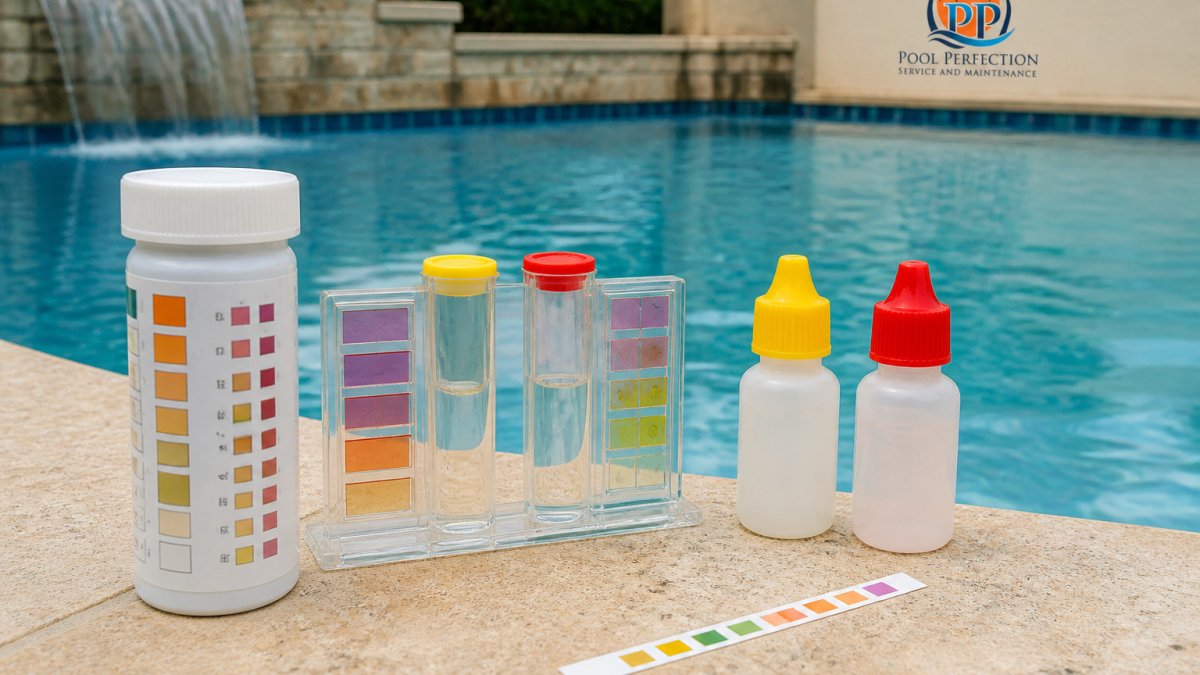
Pool test strips are thin plastic strips with reagent pads. You dip one into the water, wait for the specified time, and compare the color on each pad to a printed chart. Most strips measure several factors at once, such as free chlorine, total chlorine, pH, alkalinity, and hardness, depending on the product.
For example, the Aquachek 4 Way Chlorine Test Strips 50 Count and the Aquachek 4 Way Red Bromine Test Strips 50 Count are popular options if you want a quick, hands-off reading. You can find the bromine version here: Aquachek 4 Way Red Bromine Test Strips 50 Count. If your pool uses chlorine, the chlorine version is available here: Aquachek 4 Way Chlorine Test Strips 50 Count.
Pros and Cons of Pool Test Strips
Pros:
- Quick results, often in under a minute
- Low upfront cost and easy to store
- Convenient for routine checks between service visits
Cons:
- Color matching can be hard to read in bright sunlight or low light
- Strips can lose accuracy if they get damp or expire
- Usually less precise than liquid kits for exact chemical levels
Strips work well for a quick routine check. Where precision matters most, many owners pair them with a liquid kit.
How to Test Pool Water with a Liquid Test Kit
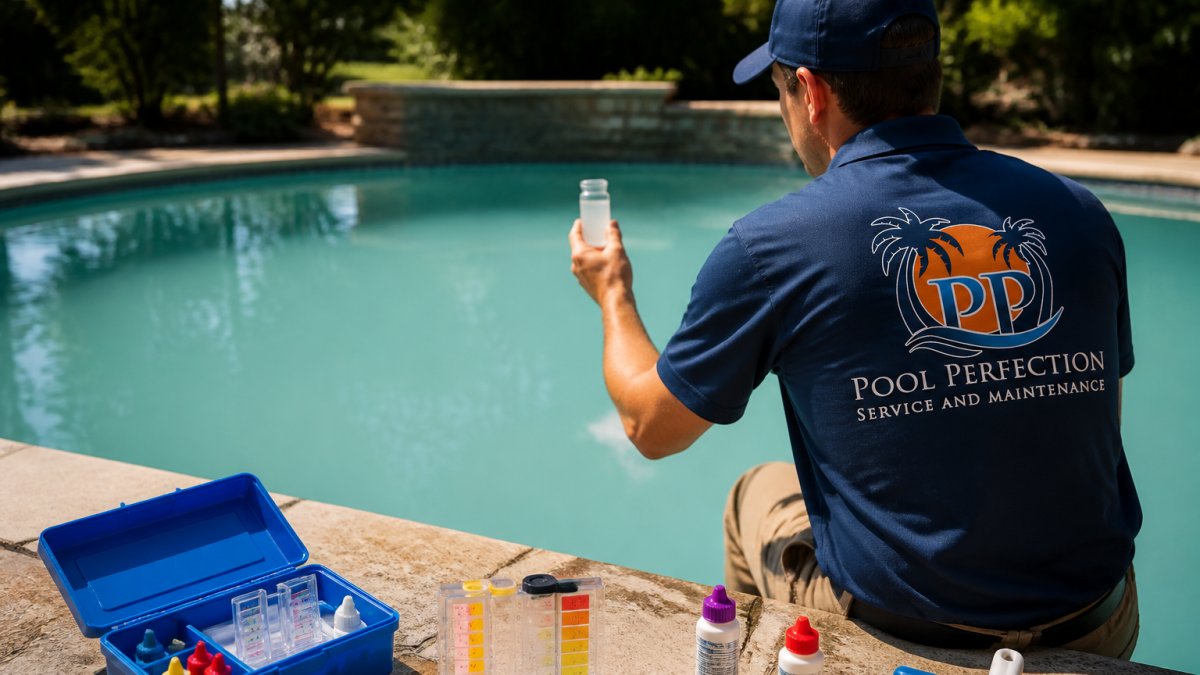
A liquid test kit uses small vials of reagent and drops that change color when mixed with a water sample. You fill the test tube to the marked line, add the reagent drops one at a time, and swirl after each addition. Then you compare the final color to a chart. The process takes a few more minutes than strips, but many owners find the results easier to trust.
- Collect water from about 18 inches below the surface, away from the return jets.
- Rinse the test vial with pool water, then fill it to the line.
- Add reagents in the order listed in your kit's instructions.
- Swirl gently, wait the recommended time, and compare the color.
- Record your readings so you can spot trends over weeks, not just one day.
Pros and Cons of Liquid Test Kits
Pros:
- More precise readings for chlorine, pH, and alkalinity
- Results are easier to compare against a color chart in most lighting
- Kits can last a full season with proper storage
Cons:
- Takes more time and more steps than strips
- Reagents need careful handling and replacement
- Higher upfront cost than a single pack of strips
Pool Test Strips vs Liquid Test Kit Accuracy
Liquid kits are generally considered the more precise option, especially for chlorine and pH. Strips give a reliable general picture, but small differences in color can be hard to read, and that can make a reading look more or less balanced than it really is.
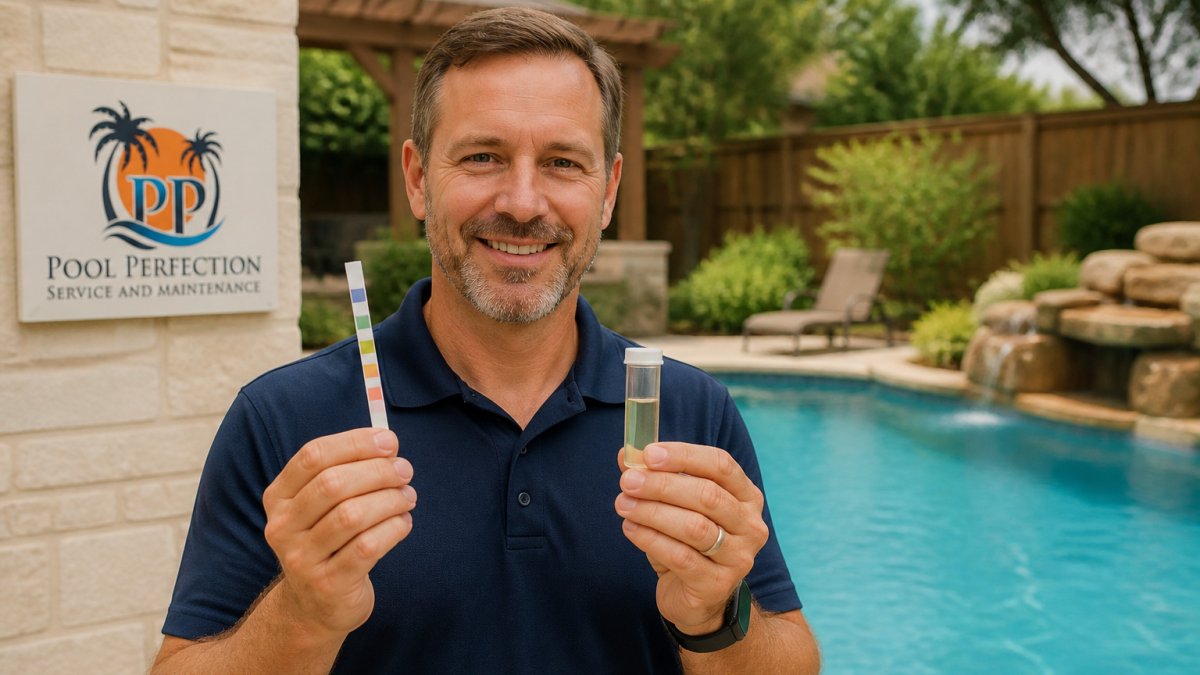
If you are unsure whether a strip reading is accurate, test the same sample with a liquid kit. Many owners do this once or twice a season to confirm their routine is on track.
Why Pool Test Strip Results Don't Match a Liquid Test Kit
Differences between strip and liquid results usually come from a few common causes:
- Expired or damaged strips. Moisture and heat can change how the reagent pads react.
- Timing. Reading a strip too early or too late can shift the color.
- Lighting. Shade, indoor light, and glare all affect how colors look.
- Sampling location. Water near the surface or near returns may not reflect the whole pool.
If the two results disagree, retest with fresh strips and a new liquid sample from the same spot. Keep in mind that even a good test cannot explain why water is cloudy or why chemicals keep running out. That can have several possible causes. Our Service and maintenance visits support pool maintenance.
How Often to Test Pool Water and Which Method Fits Your Routine
For most residential pools, testing two to three times a week during warm months is a good starting point, and more often after heavy use, heavy rain, or a heat wave. Strips are a practical choice for these routine checks. Use a liquid kit once a week, or whenever you want a more precise reading before adding chemicals.
| Method | Best For | Speed | Precision | Upkeep |
|---|---|---|---|---|
| Test strips | Quick routine checks | Under 1 minute | Moderate | Replace when expired |
| Liquid test kit | Precise weekly readings | 5 to 10 minutes | High | Replace reagents as needed |
| Professional check | Hands-off accuracy and advice | Handled by our team | High | None on your end |
Booking Your Next Pool Water Check with Pool Perfection
If testing your pool water keeps getting pushed to the bottom of your to-do list, we can take it off your plate. Our team at Pool Perfection LLC, a family-owned and operated company, provides pool maintenance, and we treat every pool as if it were our own. You can learn more on our Your Pool Deserves Perfection page, or reach out through our contact page with any questions before you book.
Frequently Asked Questions
Are liquid pool test kits more accurate than test strips?
Liquid test kits and test strips use different methods to assess pool water. Strips compare a color pad to a printed chart. Liquid kits use reagent drops and a color comparison tube or disc. Strips can be used for a quick check between visits.
How often should you test pool water?
Testing frequency and which readings to check depend on the pool and its circumstances. If you use a weekly or every-other-week maintenance schedule, you can also ask about pool maintenance.
Why do pool test strips and liquid test kits give different results?
Strips and liquid kits use different methods to assess pool water. When results differ, the readings may not match.
Which pool water test kit is easiest for beginners?
Test strips require a dip and a color match. A liquid kit takes a few more steps. The methods differ in how they assess pool water.