 how-to
Why Pool Water Stays Cloudy: Causes & Clear Solutions
Table of Contents
- Why Pool Water Stays Cloudy: The Main Culprits
- Understanding Pool Chemistry Balance
- How to Clean a Pool Filter and Prevent Cloudiness
- Pool Clarifier vs Flocculant: Which One Works for Your Water
- Circulation and Pump Issues That Keep Water Cloudy
- Algae and Dead Algae: Why Cloudiness Lingers
- Your Action Plan: Step-by-Step Troubleshooting
- When to Call a Pool Professional
- Frequently Asked Questions
Last Updated: October 21, 2026
Why Pool Water Stays Cloudy: The Main Culprits
Cloudy pool water is frustrating, but it almost always has a fix.
Why pool water stays cloudy comes down to a few core problems: out-of-balance chemistry, a dirty or struggling filter, live or dead algae, or poor circulation. Sometimes it's a combination. Once you know the cause, the solution becomes clear.
Understanding Pool Chemistry Balance
Water chemistry is the foundation of crystal clear pools. When water is balanced, chlorine works properly and your filter can do its job. When chemistry is off, even a clean filter can't help.
Testing Your Water and Reading Results
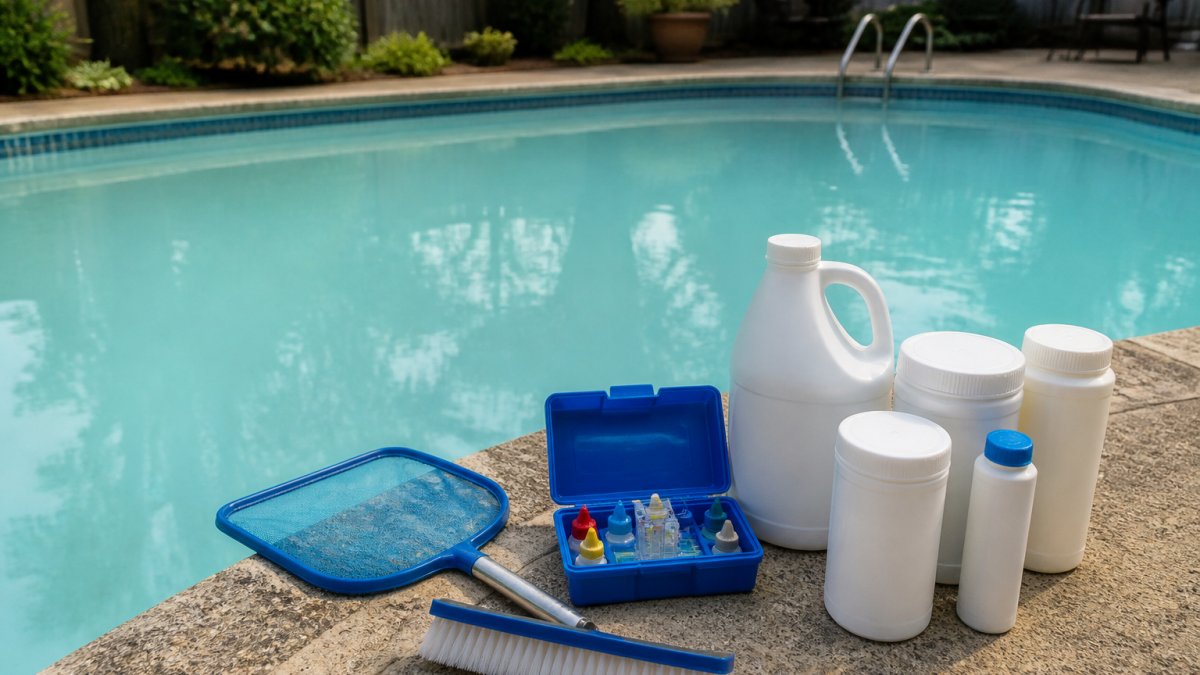
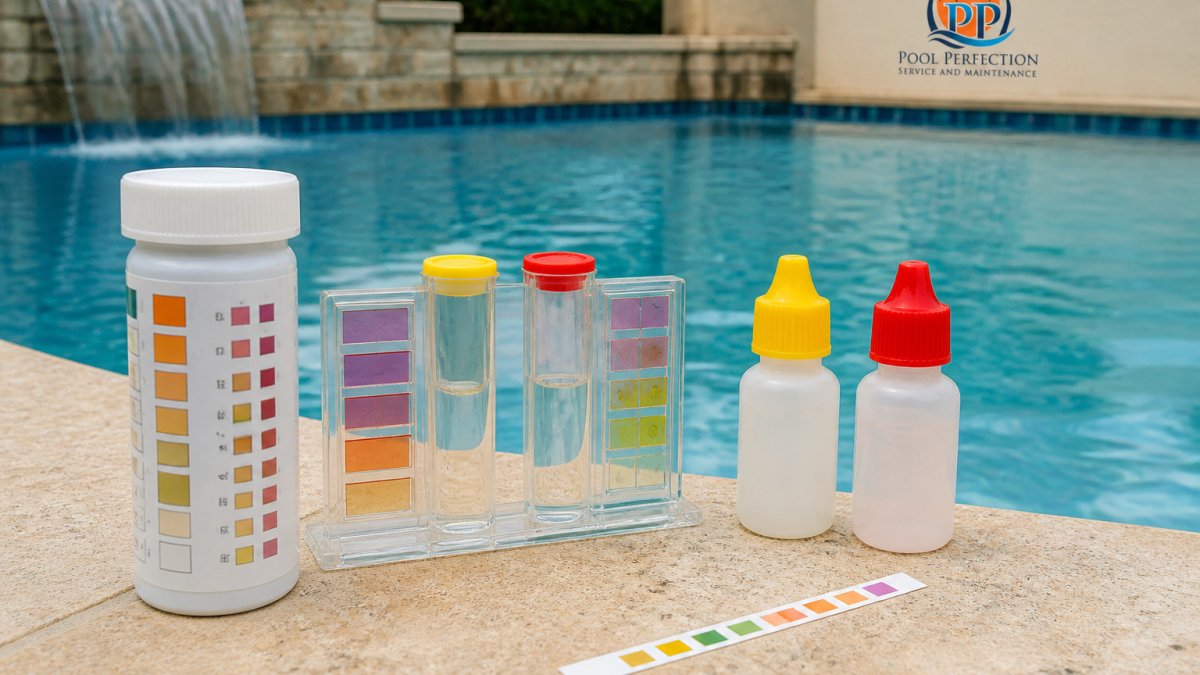
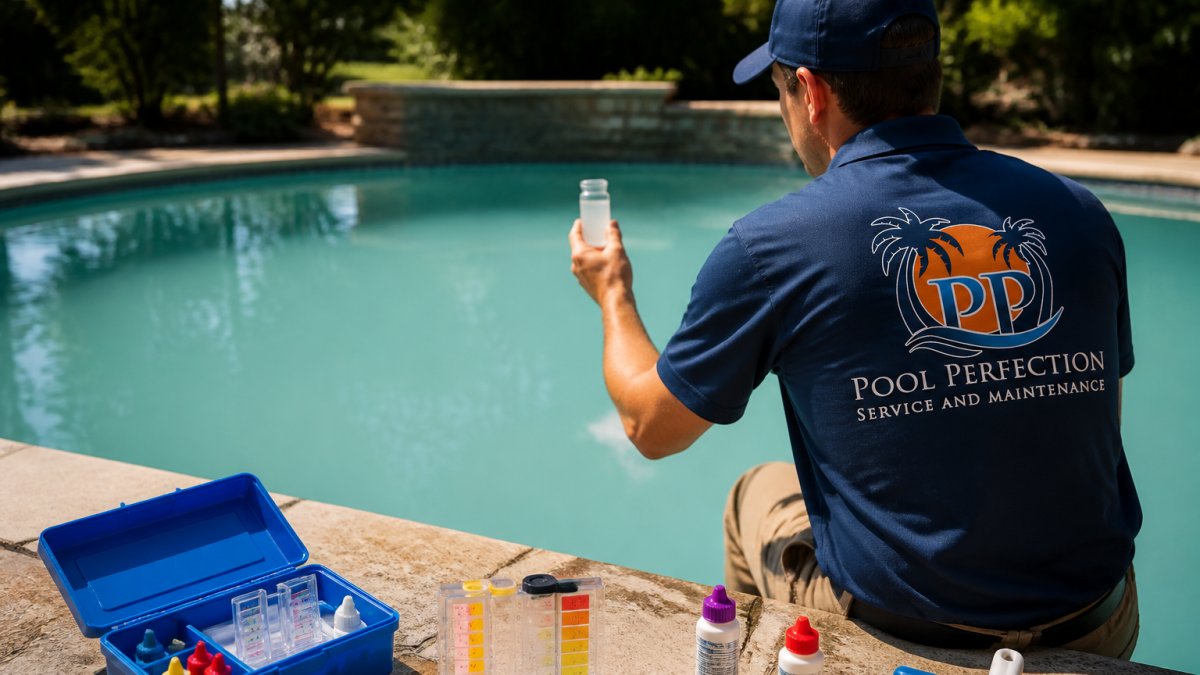
You can't fix what you don't measure. Most cloudy water problems show up in your test results before you even see the cloudiness. Get a reliable test kit and use it at least twice a week. Test for:
- Free chlorine (how much sanitizer is available)
- Total chlorine (free chlorine plus combined chlorine)
- pH (how acidic or alkaline your water is)
- Total alkalinity (the water's ability to resist pH changes)
- Calcium hardness (dissolved minerals in your water)
Write your results down and track patterns over time. If free chlorine is low but total chlorine is high, you have a combined chlorine problem, which is different from simply needing more chlorine.
Chlorine, pH, and Alkalinity: The Core Three
These three work together. Get them right, and most cloudiness disappears.
Free chlorine is your sanitizer.
How to Clean a Pool Filter and Prevent Cloudiness
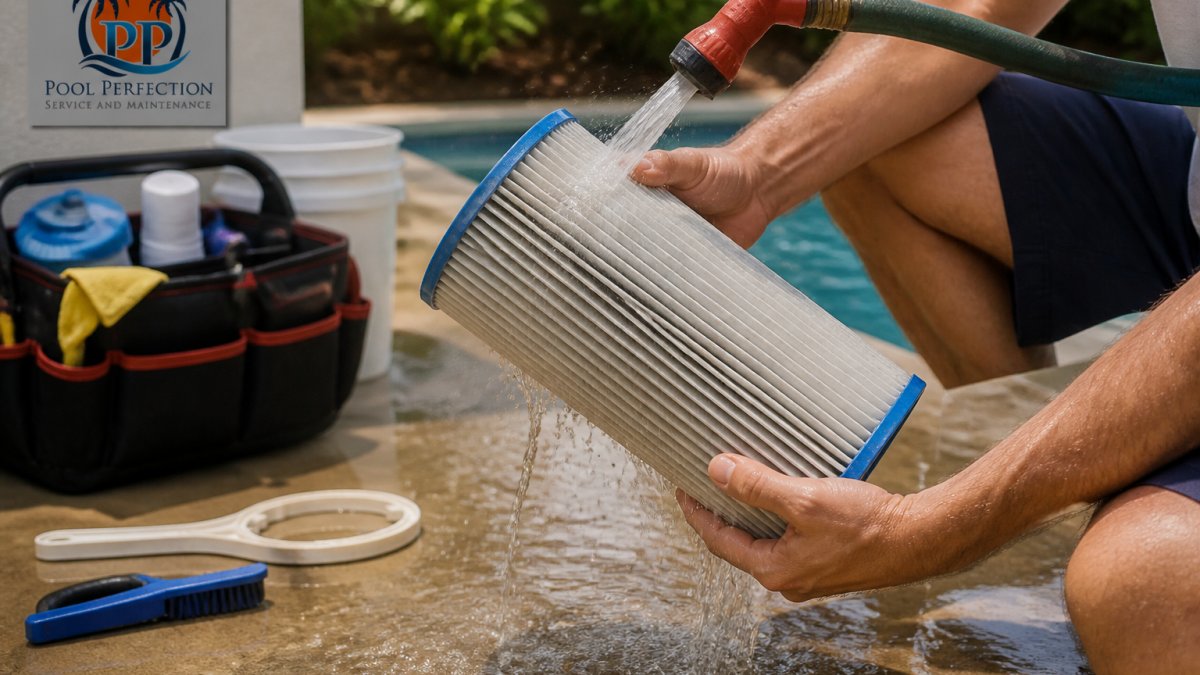
A dirty filter can't clean water. As trapped particles build up, they slip through and cloud your pool.
Recognizing When Your Filter Needs Cleaning
Your filter tells you when it's struggling. Watch for these signs:
- Filter pressure gauge reads 8-10 psi higher than your clean baseline
- Water flow from return jets feels weaker
- Water clarity doesn't improve even after chemical treatment
- Cloudy water returns quickly after you shock the pool
- Backwashing doesn't help (or helps only briefly)
If pressure is climbing, cleaning is urgent. A clogged filter works harder and wears out faster.
A quick note on filter type. Before you clean anything, confirm what you have.
Cartridge Filters: Step-by-Step
Most residential pools use cartridge filters.
- Turn off the pump and release pressure using the air relief valve
- Open the tank and remove the cartridge
- Rinse with a garden hose, spraying top to bottom
- Soak in filter cleaner if heavily soiled (follow product directions), then rinse thoroughly
- Reinstall the cartridge, close the tank, and turn the pump back on
- Check the pressure gauge, which should drop to normal
This takes about 30 minutes. Do it every 4-6 weeks during heavy use, or sooner if pressure climbs faster.
Sand Filters: Backwash, Rinse, and When to Change the Sand
- Turn off the pump and set the multiport valve to Backwash
- Run the pump until the sight glass clears (usually 1-3 minutes)
- Switch off, set the valve to Rinse, and run 15-30 seconds to settle the sand bed
- Return the valve to Filter and restart the pump
Backwash when pressure rises 8-10 psi above baseline, not on a fixed calendar.
DE Filters: Backwash and Recharge
DE filters capture the finest particles, which is why they clear haze so well, but the DE coating needs maintaining.
- Backwash per the manufacturer's procedure until the sight glass clears
- Add DE powder through the skimmer at the rate on your filter label
- Watch for DE returning to the pool, which signals a torn grid or damaged manifold
If a white cloud blows from the returns right after a recharge, stop and inspect the grids.
Signs of Damaged Internals or Bypass
A filter can look clean and still be bypassing water. Watch for these clues:
- Pressure stays high even after a thorough cleaning
- Pressure stays unusually low, suggesting water is bypassing the media
- Debris blows back into the pool from the returns
- Sand or DE appears in the pool
- The multiport valve spider gasket leaks, letting water skip the filter
- Cracked laterals or a broken standpipe in a sand filter
If you spot any of these, the filter needs internal service, not another cleaning.
Preventing Cloudiness Between Cleanings
- Keep pump run time consistent so water keeps moving through the media
- Skim and brush weekly so less debris reaches the filter
- Watch the pressure gauge as your early-warning system
- Don't over-backwash a sand filter; a slightly dirty bed filters better
- Replace worn cartridges rather than stretching them
If filter service feels like guesswork, that's exactly the kind of thing we handle for our neighbors. Our service and maintenance team can inspect your filter, check the internals, and get your system back to doing its job.
Pool Clarifier vs Flocculant: Which One Works for Your Water
Sometimes chemistry is balanced but water still looks hazy. Tiny particles are suspended in the water, too small for your filter to catch. That's when clarifier or flocculant can help.
Clarifier works slowly, clumping tiny particles over 24-48 hours so your filter can catch them. It's gentler, and you can still swim while it works. Flocculant works fast, dropping particles to the pool floor in 2-4 hours for you to vacuum up, but you can't swim while it's working.
Use clarifier for minor haziness and flocculant when water is noticeably cloudy and you want results fast. Both work best with a clean filter and balanced chemistry, and neither fixes chemistry problems.
Circulation and Pump Issues That Keep Water Cloudy
Water needs to move. Circulation pushes water through your filter, distributes chemicals evenly, and prevents dead zones where algae can hide. If your pump isn't running enough, water gets stagnant, particles settle, and algae starts growing.
Run your pump at least 8-12 hours daily, longer in hot weather or heavy use. Check that water flows from your return jets; weak flow can mean a struggling pump, a blocked intake, or a clogged filter.
Algae and Dead Algae: Why Cloudiness Lingers
Green water means algae is growing; yellow or brown water means algae is dying. Both cause cloudiness, since live and dead algae cells stay suspended until your filter catches them.
If you shock your pool to kill algae, expect cloudiness for 24-48 hours afterward. Brush the walls and floor to stir up dead algae, and run your pump continuously until water clears, which may take a full day or longer. If cloudiness won't clear after 48 hours of running your pump, your filter needs cleaning or your chemistry is still off.
Your Action Plan: Step-by-Step Troubleshooting
Cloudy water has several different causes, and applying the wrong treatment wastes time and chemicals.
Step 1: Test and Read the Results
Test free chlorine, total chlorine, pH, total alkalinity, calcium hardness, and cyanuric acid (stabilizer). Write everything down and compare to these common target ranges:
- Free chlorine: 1-3 ppm (higher if stabilizer is high)
- pH: 7.2-7.8
- Total alkalinity: 80-120 ppm
- Calcium hardness: 200-400 ppm
- Cyanuric acid: 30-50 ppm (very high levels reduce chlorine's effectiveness)
Step 2: Use the Decision Tree
Ask these questions in order:
- Is free chlorine low (below 1 ppm) or combined chlorine high (above about 0.5 ppm)? That's a sanitation problem. Shock the pool, then retest.
- Is pH outside 7.2-7.8 or alkalinity outside 80-120 ppm? Fix alkalinity first, then pH, since alkalinity stabilizes pH.
- Is calcium hardness very high (above 400 ppm) or very low? High hardness causes scaling and haze; low hardness makes water corrosive. Address it before chasing other causes.
- Is cyanuric acid very high (above 50-70 ppm)? High stabilizer locks up chlorine, so free chlorine may read fine while sanitizing poorly. Partial drain and refill is the usual fix.
- Is the water green, yellow, or brown? Green means live algae; yellow or brown often means dying or dead algae. Brush, shock, and run the pump continuously.
- Is the water hazy but chemistry looks balanced? Suspect filtration or circulation. Check filter pressure and return flow next.
Step 3: Check Filtration and Circulation
If chemistry is in range, look at the equipment. Filter pressure 8-10 psi above baseline means clean or backwash.
Step 4: Retest on a Schedule, Not by Feel
This is where most people go wrong. Give each treatment time to work before adding another product.
- After adjusting alkalinity: retest in about 4-6 hours
- After adjusting pH: retest in about 2-4 hours
- After shocking: retest free and total chlorine in 12-24 hours
- After clarifier: allow 24-48 hours before judging results
- After flocculant: allow 2-4 hours, then vacuum the settled debris to waste
Adding product on top of product before the water responds is how pools get over-treated and cloudiness gets worse.
Step 5: Brush, Vacuum, and Keep Water Moving
Brush walls and floor to lift settled debris so the filter can catch it, vacuum what settles, and keep the pump running. Moving water clears faster than still water every time.
Step 6: Know When It's Safe to Swim
Clear water isn't automatically safe water.
Never mix chemicals together, always add chemicals to water (not water to chemicals) per the label, store them separately, and keep them away from kids and pets.
Step 7: When to Escalate
If you'd rather hand off the guesswork, we're happy to test your water, walk through what we find, and take care of the fix.
When to Call a Pool Professional
Sometimes the problem is bigger than testing and chemicals. Call a professional if:
- Water stays cloudy for more than 48 hours despite balanced chemistry and a clean filter
- Your pump isn't circulating water properly
- Your filter pressure is stuck high even after cleaning
- You're not confident in your water test results
- Equipment is making unusual noises
- You keep having the same cloudiness problem every few weeks
At Pool Perfection LLC, we help with exactly these situations. We test your water, clean and service your equipment, find the root cause of persistent cloudiness, and make sure your pool stays clear all season.
Frequently Asked Questions
Can I swim in my pool if the water is cloudy?
No, cloudy pool water means visibility is reduced, making it unsafe to swim. You won't be able to see the bottom, which increases drowning risk, especially for children. Cloudiness also signals that your water chemistry or filtration is out of balance, so bacteria or algae may be present. Wait until your water is clear and properly balanced before swimming.
How often should I clean my pool filter to prevent cloudiness?
Most residential pools need filter cleaning every 2-4 weeks during regular use. If your filter pressure gauge reads 8-10 psi above the baseline, that's your signal to clean it. During heavy use or after storms, you may need to clean more frequently. A clogged filter can't remove suspended particles, which is a leading cause of persistent cloudiness.
What's the difference between pool clarifier and flocculant?
Pool clarifier coagulates tiny particles into larger clumps that your filter can trap, the water clears gradually over 24-48 hours, and your filter does the work. Flocculant does something similar but faster; particles settle to the bottom, and you vacuum them out manually. Clarifier is better for routine cloudiness; flocculant works faster but requires more hands-on cleanup. Never mix them together.
Why does my pool water stay cloudy even after I add chemicals?
Cloudy water after chemical treatment usually means either your filter isn't clean enough to remove the particles you've coagulated, your water chemistry is still unbalanced, or circulation is poor. Test your water first, if chlorine and pH are off, no clarifier will help. Check your filter pressure and ensure your pump is running 8-12 hours daily. If all that checks out, the problem may require professional water testing and equipment inspection.
Cloudy water doesn't have to be permanent. Most problems clear up once you understand what's causing them. Start with testing. Balance your chemistry. Clean your filter. Give your pump time to work. If you're stuck or the problem keeps coming back, we're here to help. Contact Pool Perfection LLC to schedule a water test or equipment service. We'll get your water crystal clear and keep it that way.